


Reframing the "Inauthenticity Tax"
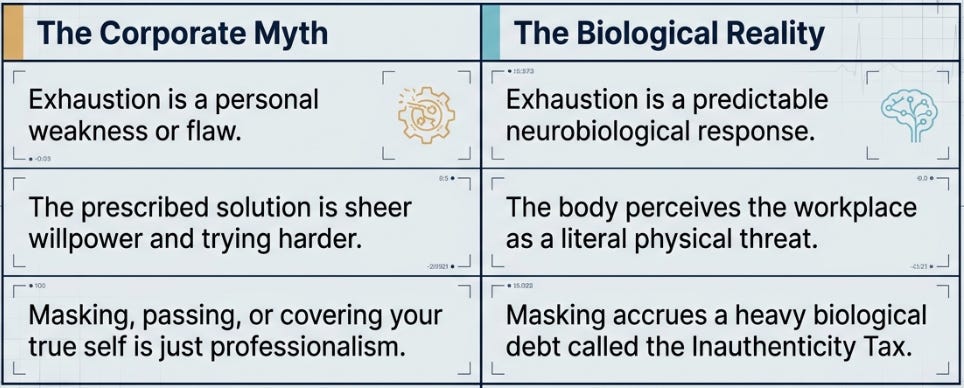
If you have ever finished a workday feeling utterly exhausted - not just physically tired, but emotionally empty - you are likely paying what I call the “Inauthenticity Tax.” This is the heavy biological debt accrued from “masking,” “passing,” or “covering” - the constant effort to suppress your true self to fit into a corporate mould. For too long, we have viewed this exhaustion as a personal “weakness” or a lack of resilience. However, the science of the nervous system tells a different story.
Your exhaustion is not a personal flaw; it is a predictable neurobiological response to your environment. When you are forced to hide who you are, your body perceives the workplace as a place of threat rather than safety. Your exhaustion is a biological reality and a structural failure of your workplace, not a personal flaw. By shifting our perspective from judgment to curiosity, we can begin to understand the foundations of safety and the high cost of its absence.
The Science of Why You’re Tired
To understand why masking is so draining, we need to look at our own evolutionary biology. Understanding these ancient circuits is the first step toward self-compassion; it allows us to stop blaming our minds for what our bodies are doing to survive.
According to Polyvagal Theory, mammals possess a unique neurophysiological system called the Ventral Vagal Complex (VVC), or the “Social Engagement System.” This is not just a psychological concept; it is a genetically supported innovation. Recent studies have identified specific gene profiles that support the myelinated vagus, an evolutionary leap that allows mammals to support social behaviour, emotional resilience, and physiological flexibility.
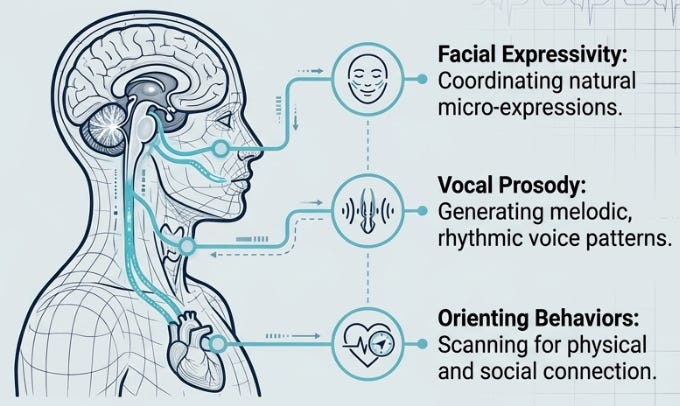
The VVC functions by integrating the vagus nerve with cranial nerves, which coordinate facial expressivity, vocal prosody, and orienting behaviours. When you mask - stifling your natural facial expressions or flattening your voice to appear “professional” - you are essentially forcing this Social Engagement System offline.
Masking as a Biological Drain
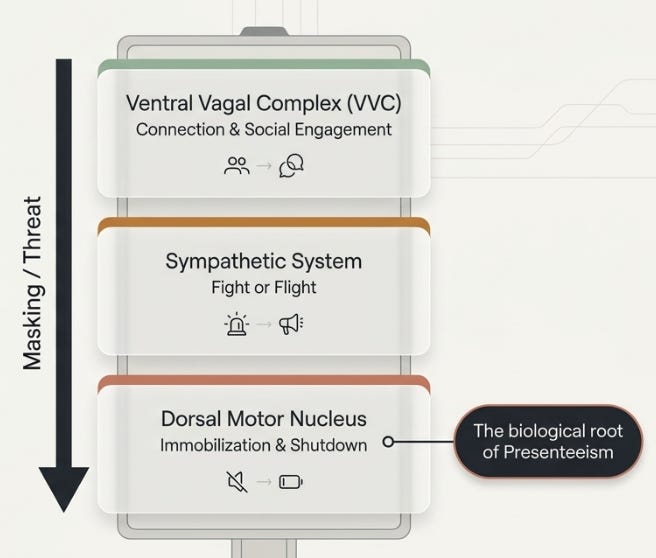
Masking is more than just a social chore - it is a biological tax that triggers something called, “Jacksonian dissolution.” This is the process where, under threat, our nervous system loses its most advanced human capacities first. When you suppress your true self, your body moves from the VVC (connection) into more ancient defence circuits: the sympathetic nervous system (fight/flight) or the dorsal motor nucleus, which governs immobilisation and shutdown. This “shutdown” is the biological root of presenteeism - the heavy feeling of being physically at your desk but mentally and emotionally “locked away.” Your body is essentially downshifting into survival mode, leaving no fuel for your career or your joy.
Neuroception: Why “Trying Harder” Doesn’t Work
Many high-achievers respond to exhaustion by “trying harder,” but “willpower” cannot override your survival instincts. This is because of Neuroception - the nervous system’s non-conscious detection of safety or threat. Long before your conscious mind processes a stressful meeting, your body has already scanned the environment for cues. We mask because our neuroception has detected that being ourselves is “unsafe.”
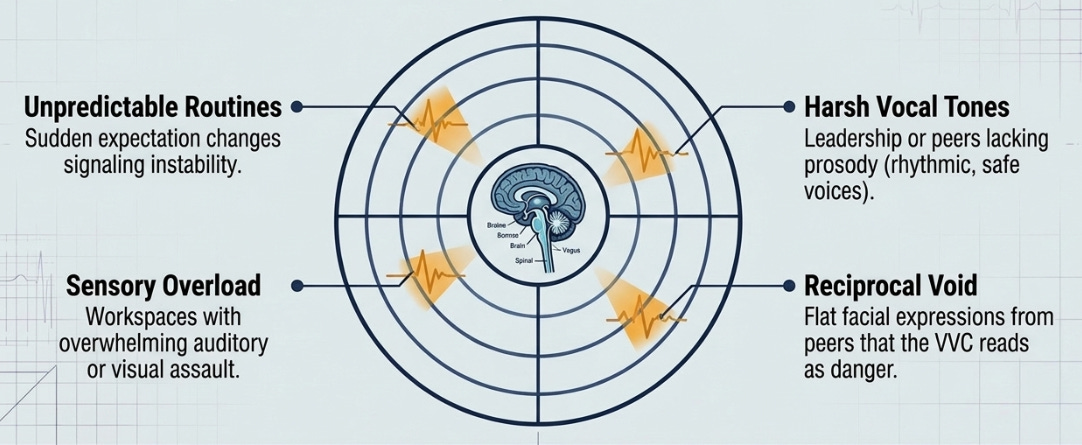
Signs Your Workplace is Triggering Defensive Neuroception:
The Biological Lock on Innovation
When your environment triggers defensive neuroception, your access to higher-order cognitive capacities is biologically “locked.” Science tells us that learning and creativity are fundamentally state-dependent. If your VVC is offline, your brain is biologically incapable of “Innovation Mode.” The “Loss of Innovation” in corporate spaces is rarely a talent problem; it is a biological result of employees living in survival mode.
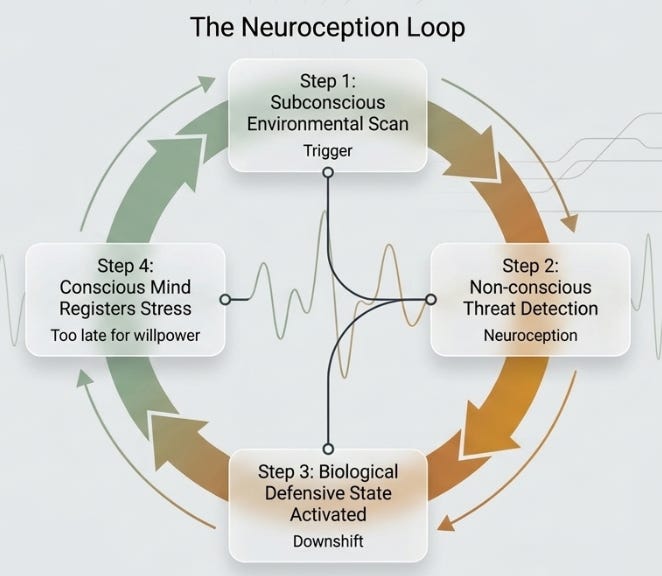
Measuring the Hidden Cost: RSA and Vagal Efficiency
To validate the subjective feeling of burnout, we use objective biological markers. These move the conversation from “feelings” to measurable physiological facts, proving that your exhaustion has a physical footprint.
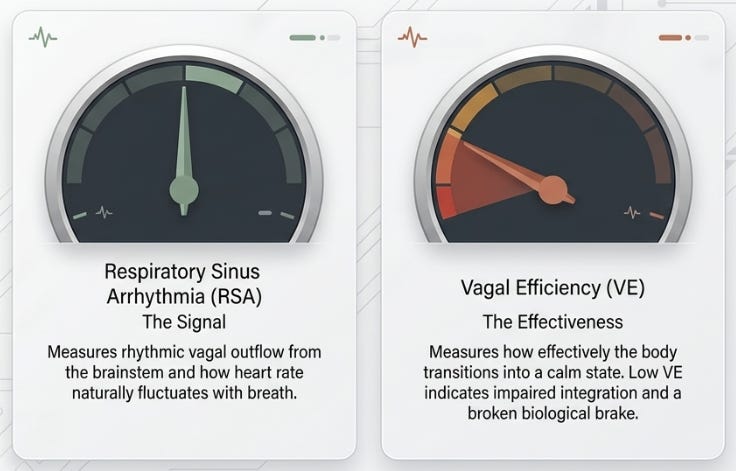
The Physiological Legacy of Threat
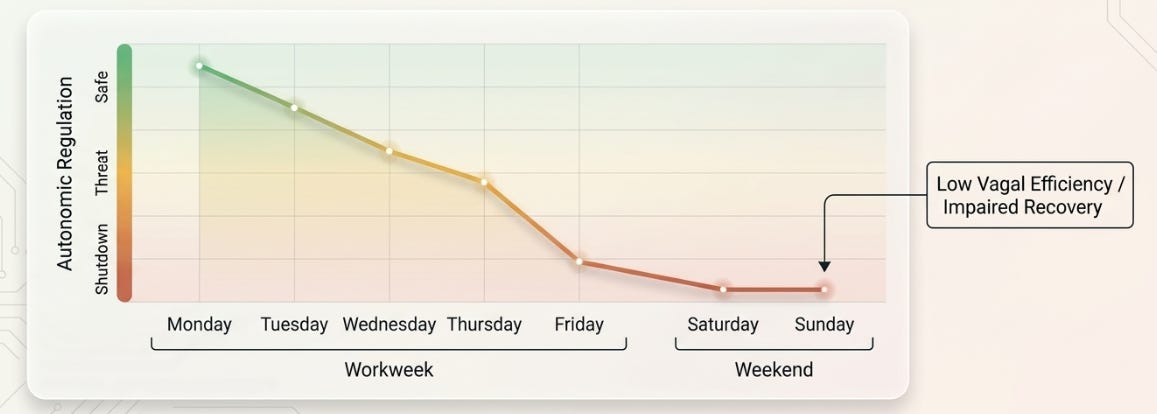
Low vagal efficiency is the biological equivalent of the Inauthenticity Tax. If your workplace consistently cues danger, you may suffer from a “physiological legacy of threat.” This means your body continues to pay the debt even when you are “off the clock.” It’s why you feel exhausted all weekend; your body has lost its ability to use its “vagal brake” effectively. This isn’t a lack of willpower; it is a measurable, impaired state of autonomic regulation.
A Step-by-Step Guide to Reclaiming Your Safety
Since the “tax” is paid by the body, the “refund” must be physical. Reclaiming safety requires “bottom-up” regulation strategies - prioritising your body’s signals over your mind’s narratives.
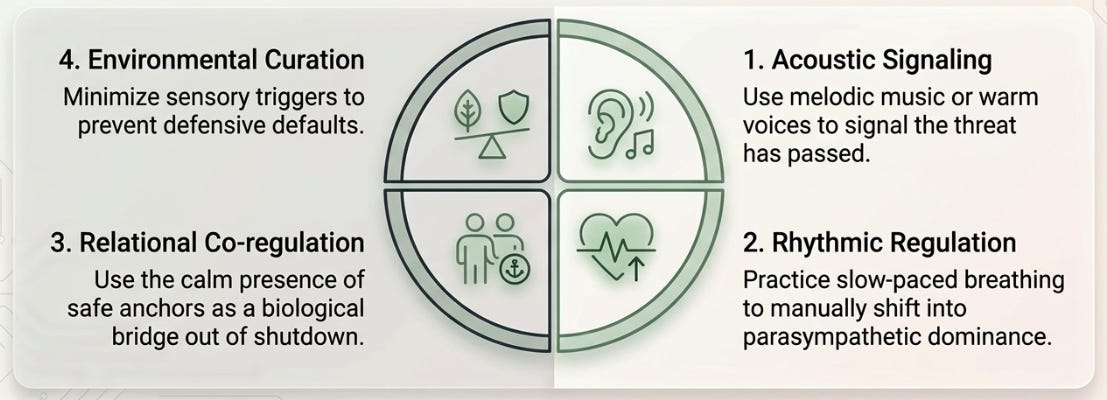
Restoring Your Foundation
These steps are a “counter-tax.” By signalling safety to your body, you restore the physiological foundation required for the very things your job demands: creativity, connection, and clarity.
From Individual Resilience to Systemic Change
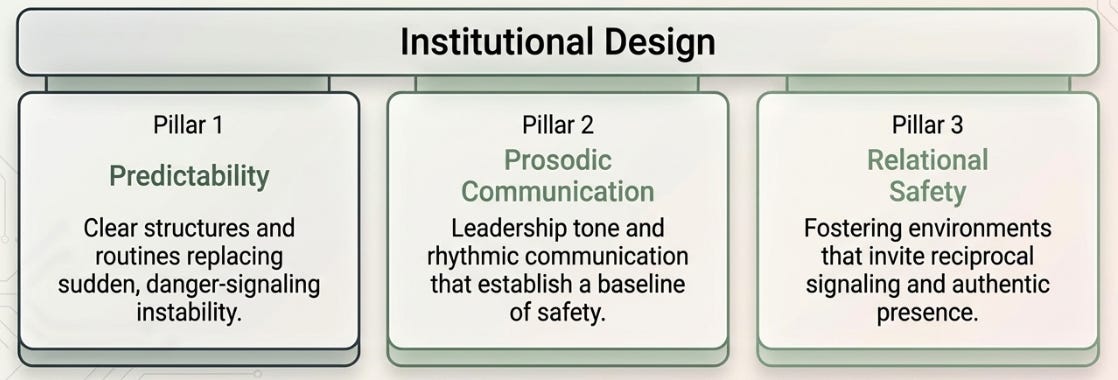
While individual regulation tools are vital, the ultimate responsibility for wellness lies in institutional design. We must stop “retrofitting” wellness initiatives - like yoga at lunch - onto toxic environments. No amount of meditation can fix a neuroceptive threat from a toxic culture or a lack of psychological safety.
We must challenge our organisations to ask the guiding question: “Does this environment send cues of safety or cues of danger?” Institutions that prioritise predictability, prosodic communication, and relational safety are not just being “nice” - they are designing for the reality of the human nervous system.
The Inauthenticity Tax is a debt your body shouldn’t have to pay. How do you measure the hidden cost of masking in your own workday?